Inspiration
The idea came after watching a talk at DataDrivenNYC, where ASH presented how AI is being used in therapy. It made me wonder: What if AI could help without replacing the human professional?
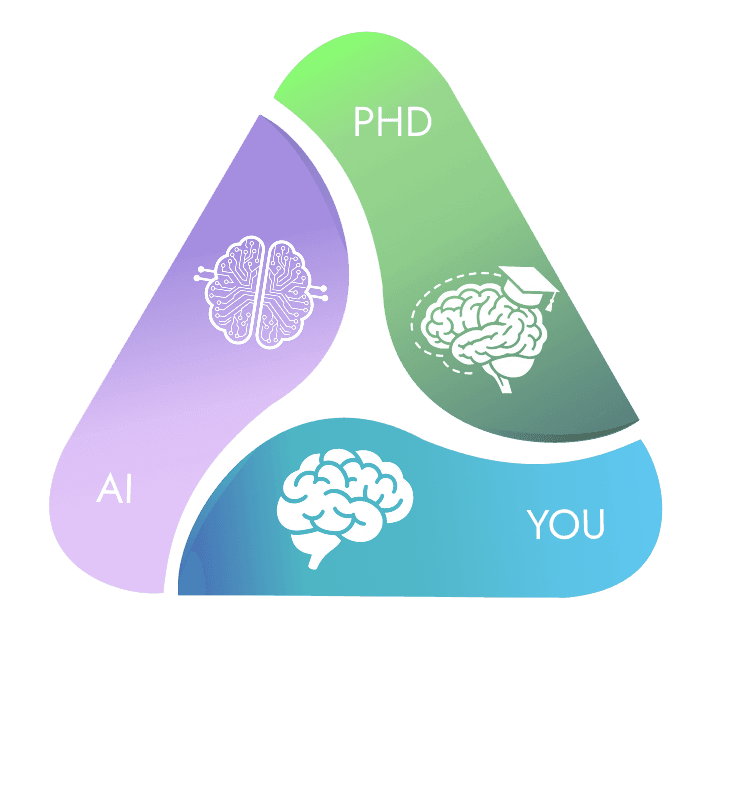
TriMind grew from that thought — a supervised, collaborative model where AI assists, the doctor reviews, and the patient stays supported.
Prototype
AI Experiment
Frontend Development
Frontend Engineering
Prototyping
Creative Direction
React
TypeScript
Figma
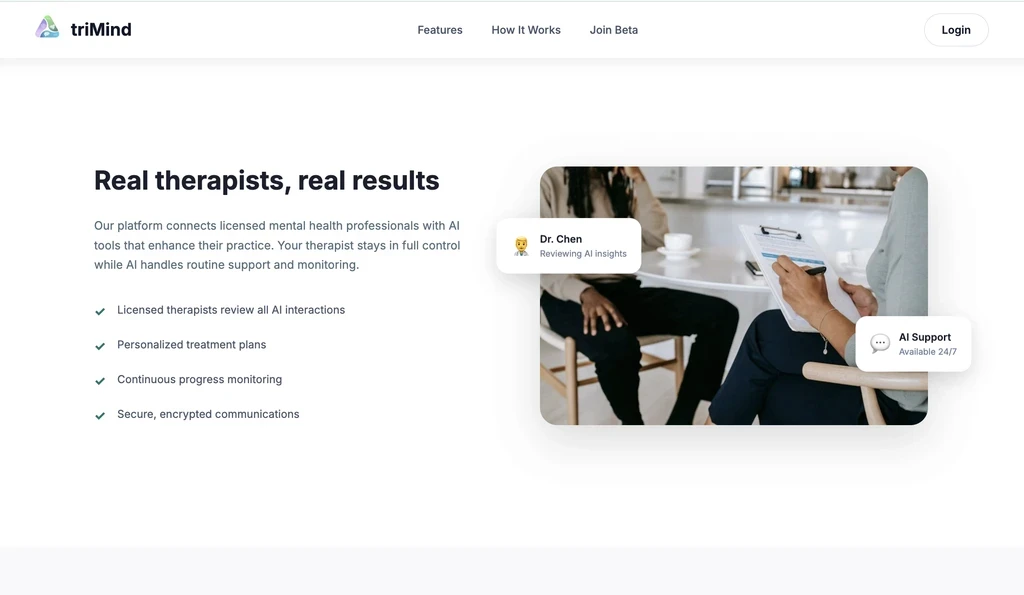
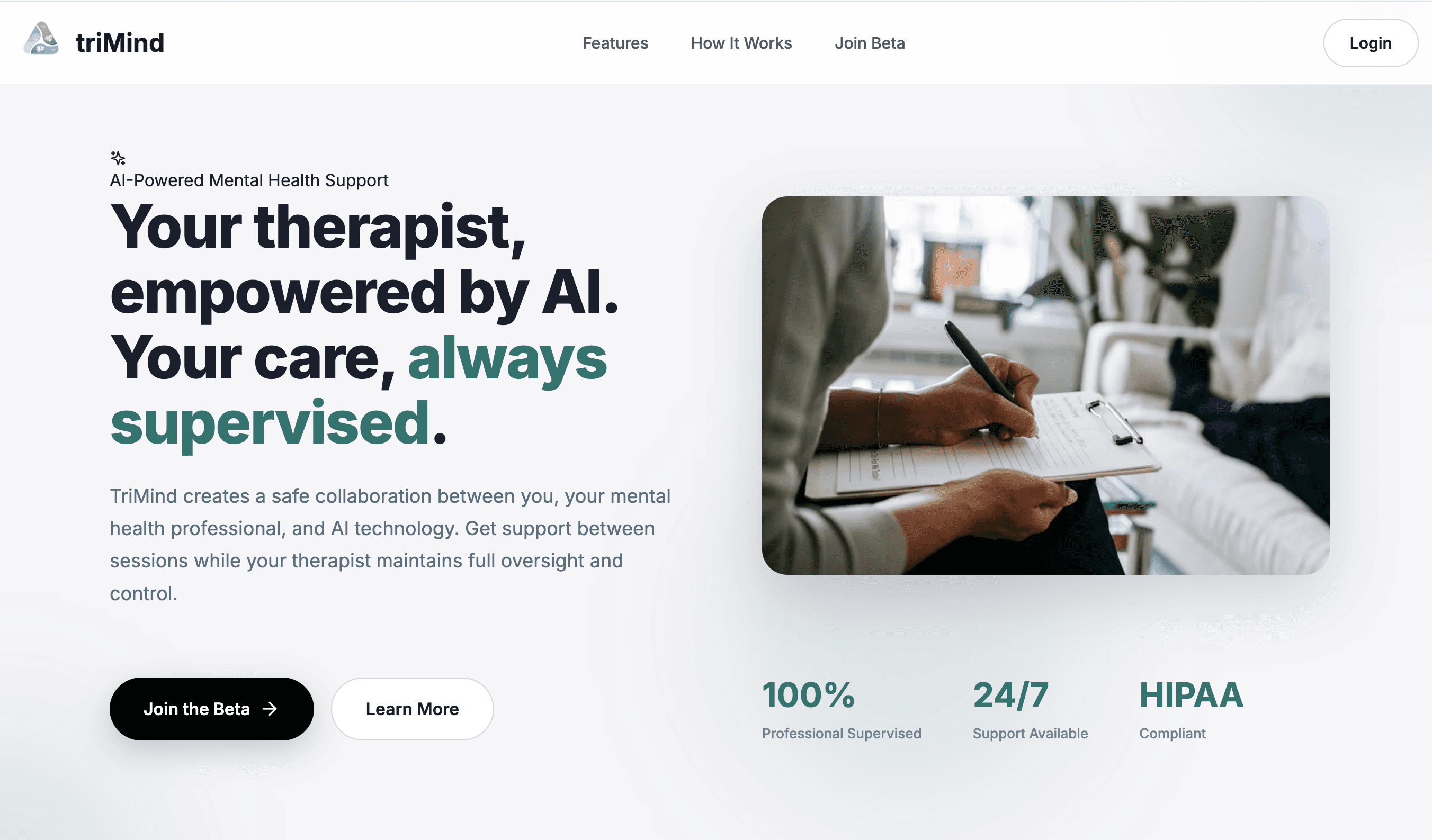
Create a fast prototype that explores how AI can help the therapy process in a supervised, doctor-friendly way. The goal was not to finish a full product, but to validate the model, the tone, and the workflow.
The biggest challenge is doctor adoption. Pure AI chatbots are easy to use but often unsafe; fully manual workflows are trusted but slow. The balance is showing clinicians that AI inside the process works better than AI outside it.
TriMind needed a flow that reduces work, never increases it, and keeps doctors fully in control.